Would you like to win a copy of this book? See my latest giveaway here!
This week we "
rowed" the book
Lentil by Robert McCloskey
.
In this story, a boy named Lentil wants to make music. However, he can't sing and he can't even "pucker his lips" to whistle. However, he discovers he has a special talent for playing the harmonica. Lentil uses this talent to save the day when a calamity threatens the homecoming celebration for the leading citizen of Alto, Ohio.
Social Studies: Geography
The story of Lentil takes place is a fictional small town in Ohio. WELL...we happen to live in a small town in Ohio. So this happens to be a setting that my children could very much relate to! We placed a story disc for Lentil on our map for the state of Ohio. Every day we would take the story disc off and review where it went on the map.
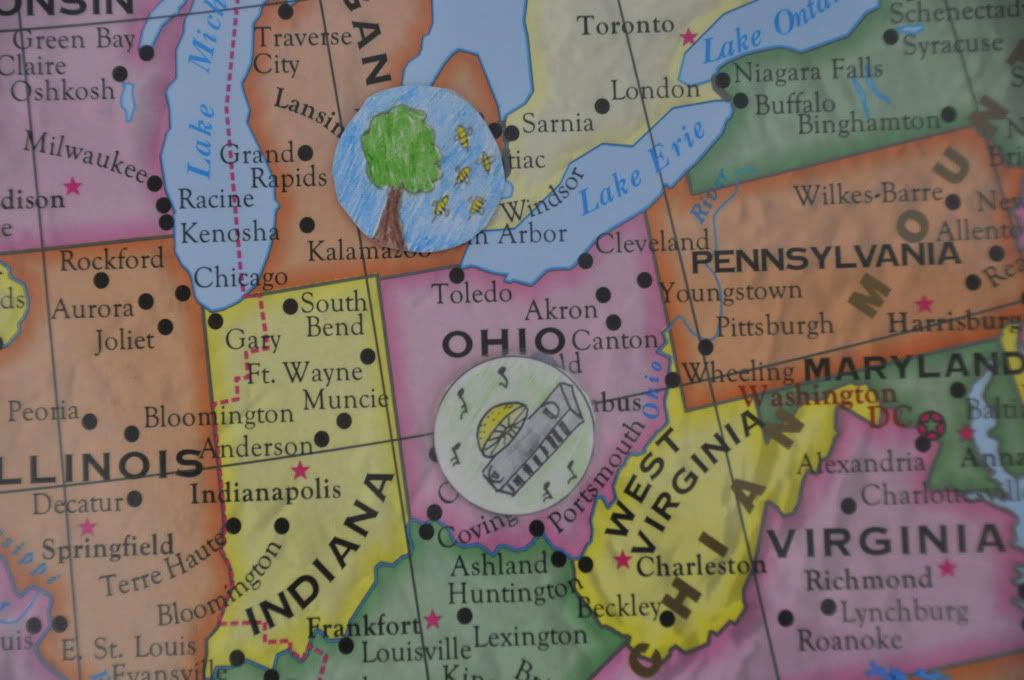 |
| Our Lentil story disc on the map |
Social Studies: Human Relationships
In the story Lentil couldn't sing. He can't even pucker his lips so even whistling is out of the question. I asked Marcus and Sophie if they have ever been part of a group where others were doing something that they couldn't do. Marcus remembered that at the swimming pool the other kids could hold their breath and jump into the water. However, he was afraid to get his face wet, so he could only climb in slowly. We talked about what it felt like to not be able to do something that everyone else could do. We talked about how Lentil might have felt when everyone else could sing or whistle but he wasn't able to pucker. However, Lentil wanted to make music, so he wasn't satisfied until he discovered that he could play the harmonica. We talked about the importance of individual differences and discovering our own personal uniqueness.
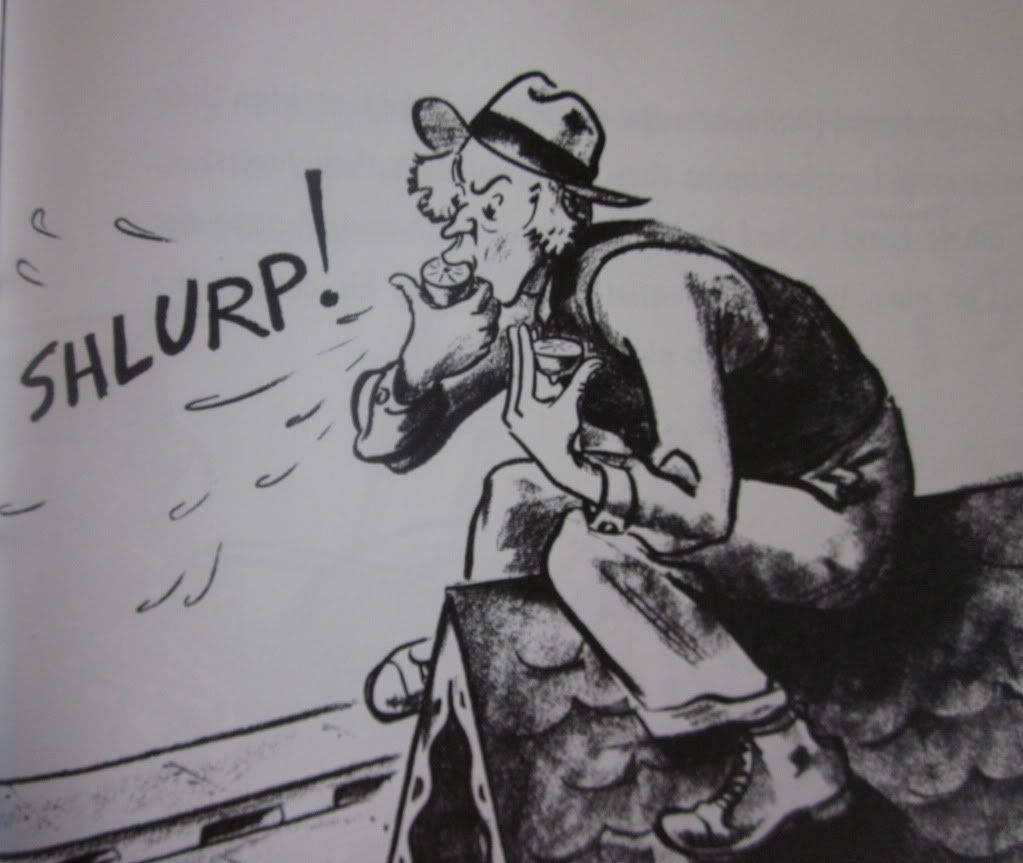
We also talked about how Lentil's weakness became an asset to him. At the end of the story, Old Sneep is sucking on a Lemon which makes the entire Alto marching band pucker up so they can't play their instruments. Since Lentil wasn't able to pucker, he was unaffected. Lentil was able to still play his harmonica which allowed him to save the town celebration.
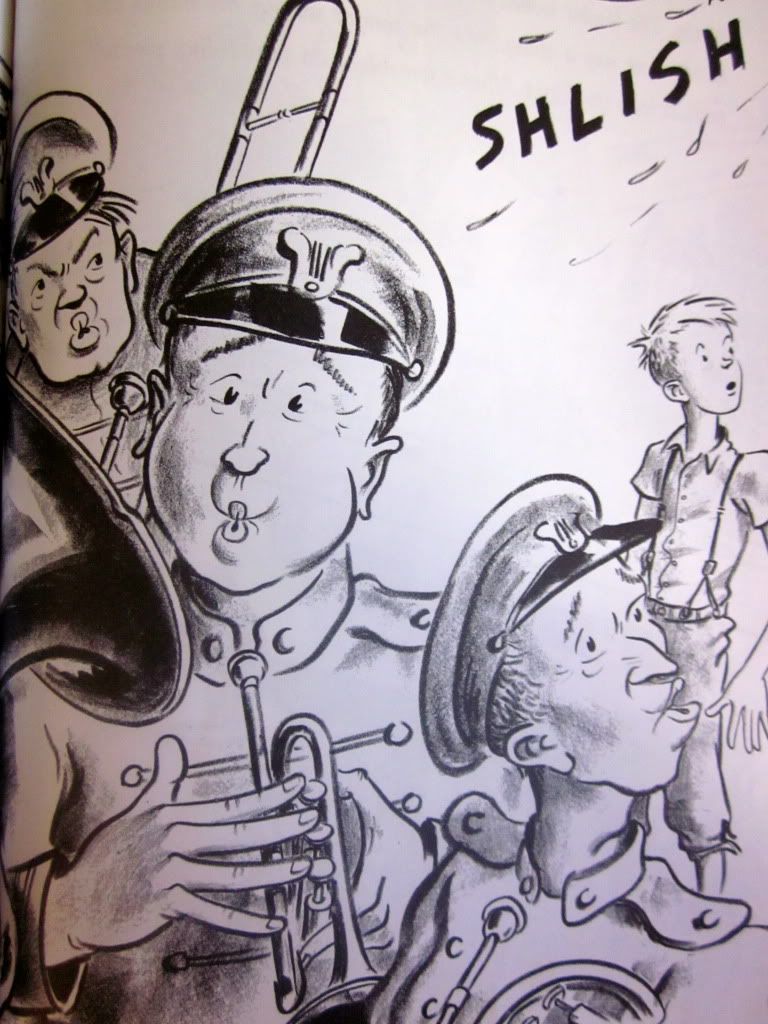 |
| The entire marching band puckers up when they see Old Sneep sucking on a lemon. This means they aren't able to play their instruments. |
Social Studies: Patriotism
The town of Alto hangs flags all over their streets in honor of Colonel Carter's homecoming celebration.
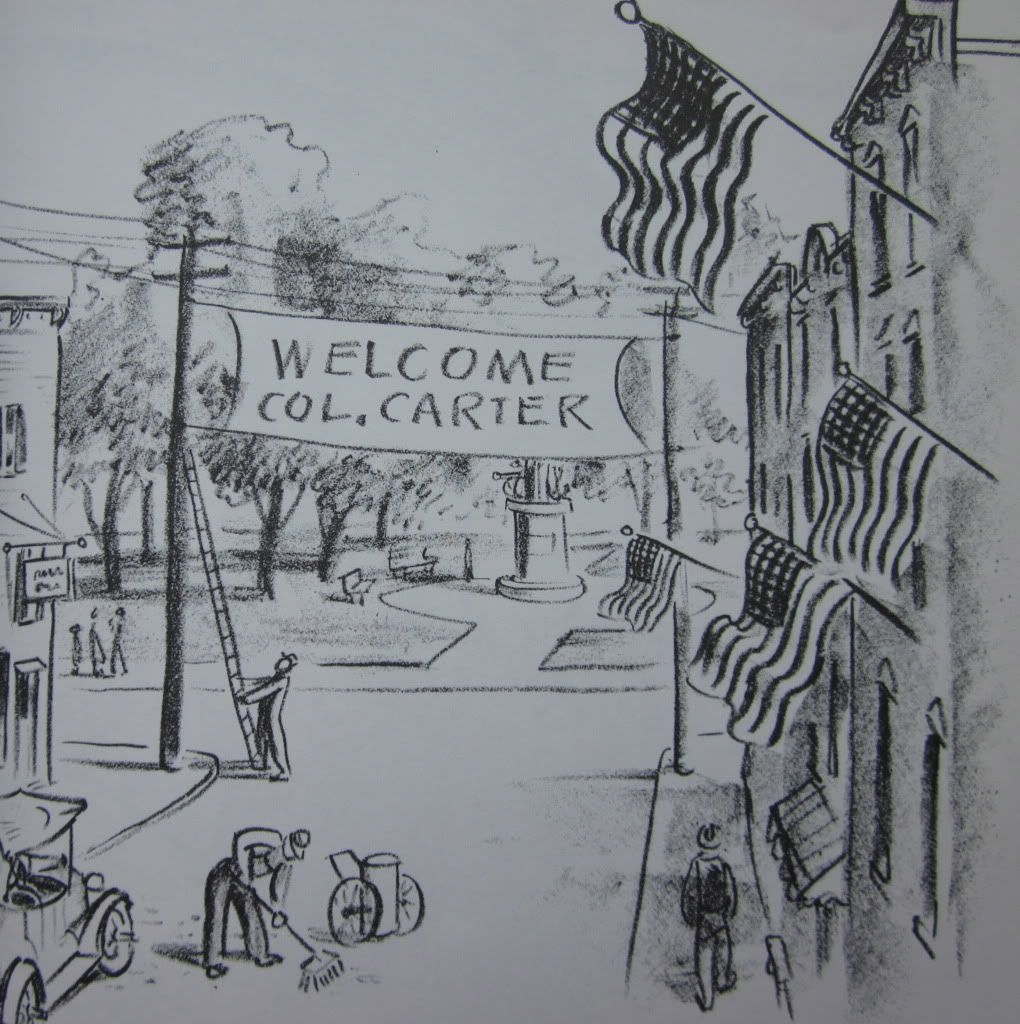 |
| The streets are decorated with the American Flag before Colonel Carter's arrival |
I showed Marcus and Sophie the flag for the United States of America. We talked a little bit about the symbolism of the flag. We talked about how the stars represented each of the 50 states. We also talked about how the stripes represented the original 13 colonies.
We also rowed this book during our town's Independence Day Celebration. So we had a lot of opportunities to talk about Patriotism. We decorated our house in the colors of our flag. I sewed some homemade red, white, and blue pillows and table clothes with stars and stripes in them. We also tied dyed red, white, and blue T-shirts.
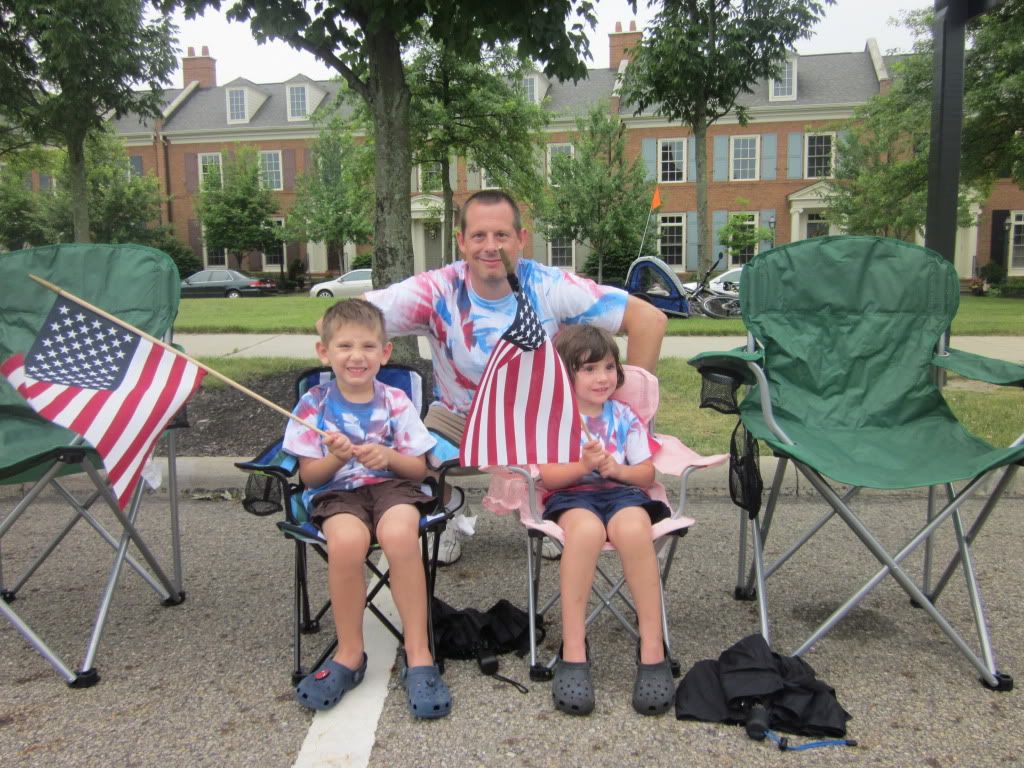 |
| The kids and their daddy in their homemade shirts wave their flags high in the air! |
Later we also went and watched our Independence Day parade. (Very similar to the one planned in the story!) Our small Ohio town hung flags all over the streets in preparation of the big event. We wore our patriotic shirts and waved our flag as the band and soldiers marched past. This was also an excellent time to talk about
flag etiquette. We talked about how we could show our flag respect by never letting it touch the ground, dragging the flag, or stepping on it. The kids took this responsibility very seriously as they waved their flags!
 |
| A Parade through a Small Town in Ohio |
That night, we gathered together with the family to watch our towns firework display.
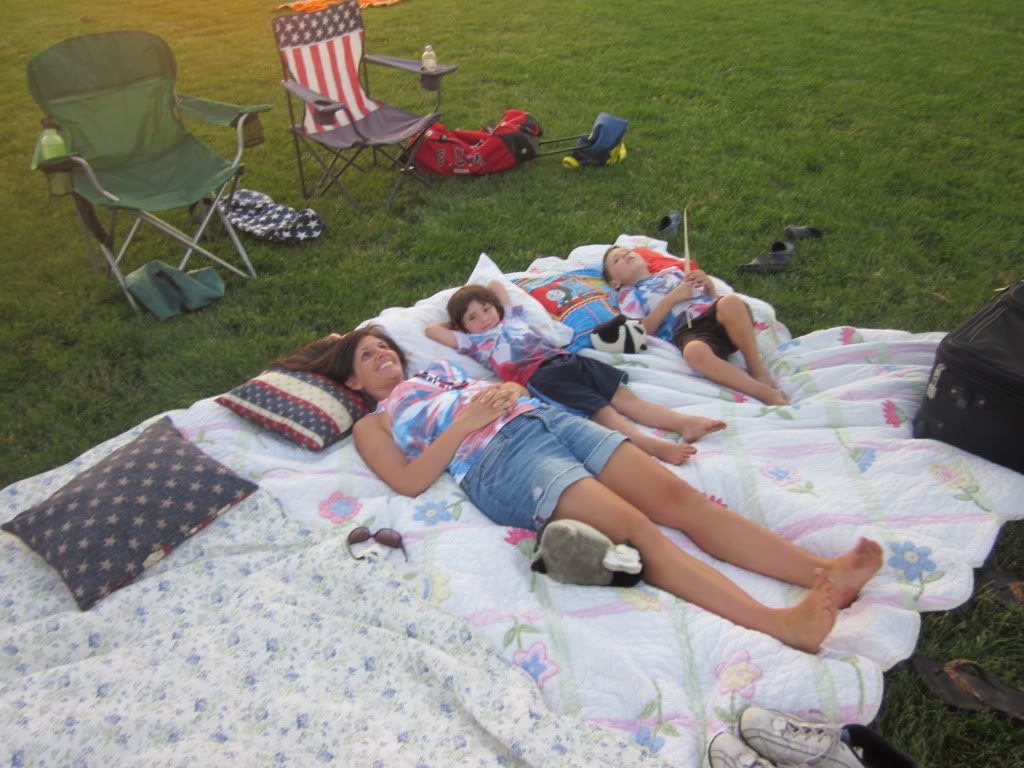 |
| Our view for the fireworks |
Sophie and Marcus were finally old enough to even light a sparkler. (They have been wanting to do this for years!)
 |
| Dad teaches the kids how to safely hold a sparkler |
Math: Patterns, Fine Motor Skills, and Art/Handicraft
On another day we brought out our countries flag again. We reviewed what colors were in our flag. We also reviewed the symbolism of the stars and stripes by counting them again. I also asked the kids if they saw any patterns in our flag. Sophie noticed that the stripes went "Red, White, Red, White, Red, White..." I then brought out some red, white, and blue
pony beads
and some
tipped laces. I practiced making a pattern and the kids would try to recognize and continue the pattern. I then gave the kids the beads and they practiced stringing them in their own patterns. Marcus made me a beautiful red, white, and blue necklace that I could wear to the fireworks. It takes a lot of work for a 4 year old to string that many beads! So it really touched my heart how much love he put into my necklace and how hard he worked out it!!
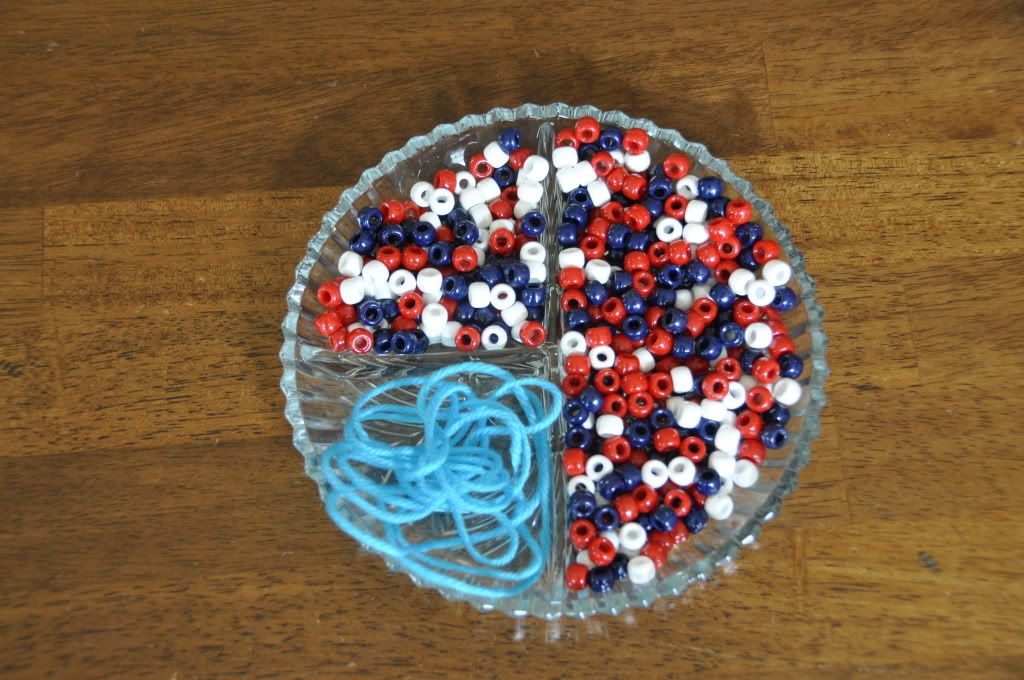 |
| Necklace Craft Tot-Tray |
Art: Whittling as a Handicraft
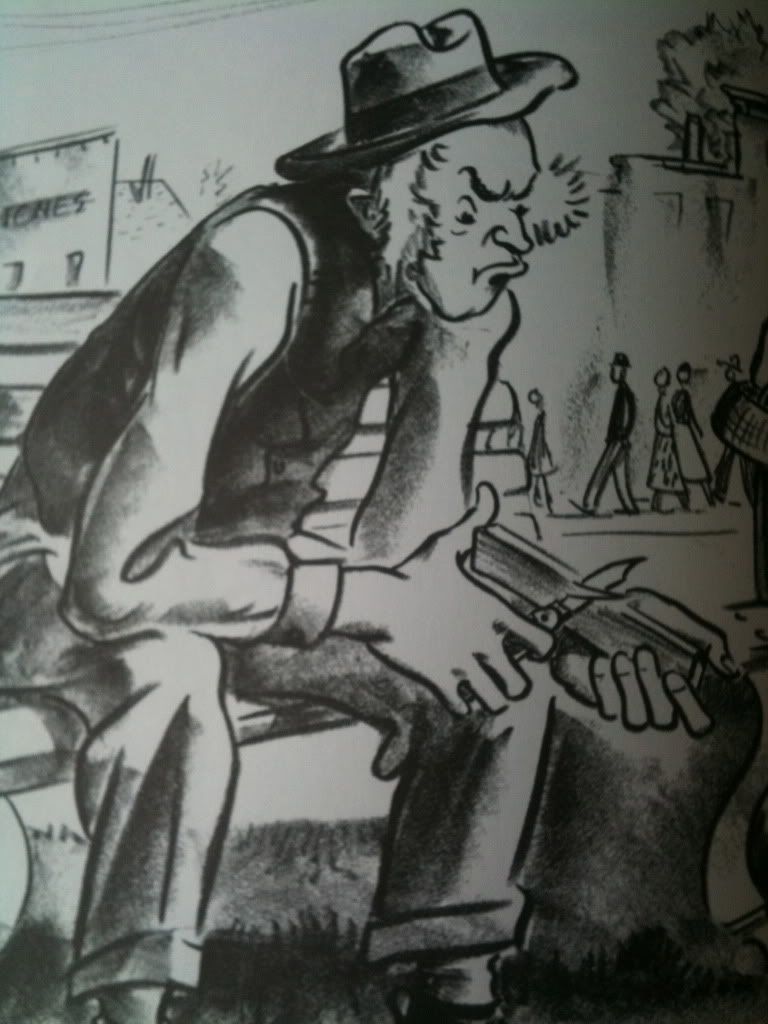
In the book, Old Sneep is jealous of Colonel Carter. So while everyone else is planning for his homecoming celebration, Old Sneep just keeps "whittling and grumbling."
Whittling is where you carve an object by repeatedly cutting small slices from it. Most young kids are probably not going to be familiar with what it means to whittle. So, we decided to give the kids a chance to practice this craft on a bar of soap using a butter knife.
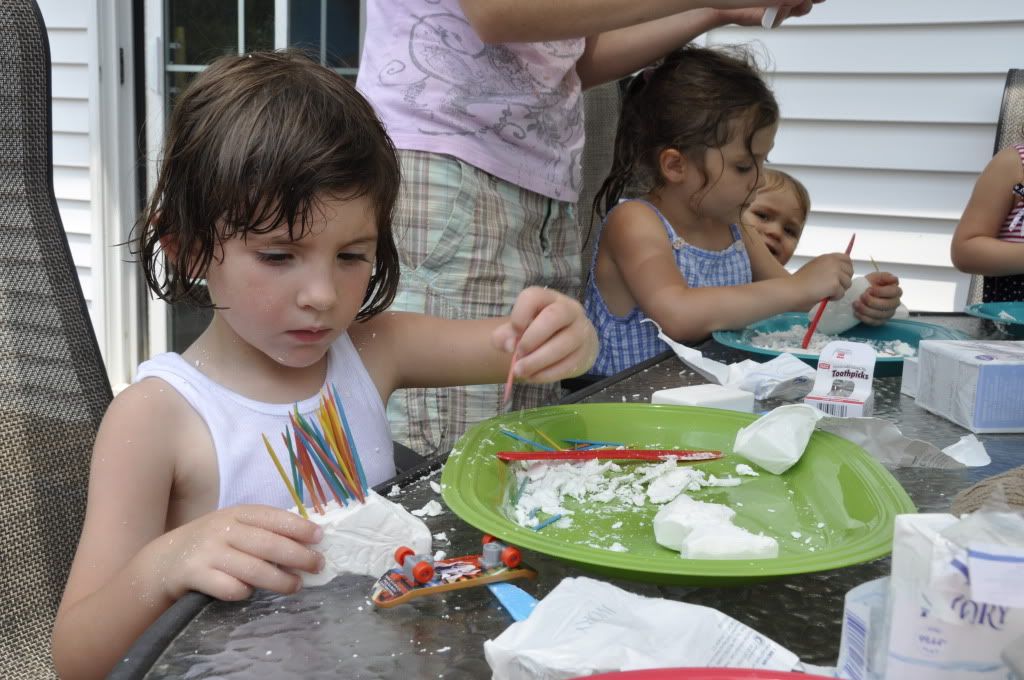 |
| Sophie and her friends "whittling" soap. (Sophie just finished running through the sprinkler. She is a busy girl!) |
Sophie really got into this activity, she made several "sharks" out of soap and even stuck toothpicks into them. I am not sure what the toothpicks were supposed to be on the shark! However, she really got into giving her sharks spines. I call it artistic license.
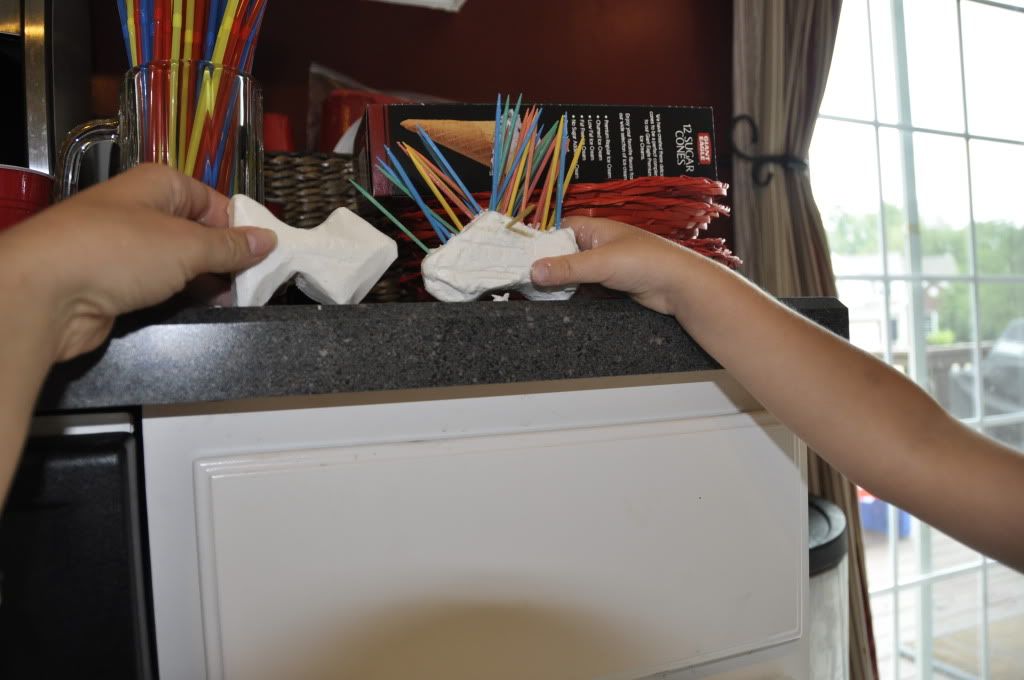 |
| Sophie's Soap Sharks |
Sensory Play:
After having a large group of kids over whittling soap, we had a lot of soap shavings left over. The other moms and I were tying think of what we could do with all of those shavings since it seemed like such a shame to throw them away. Luckily, my friend is a former preschool teacher and full of great ideas. She suggested that we set up a little sensory play with our soap.
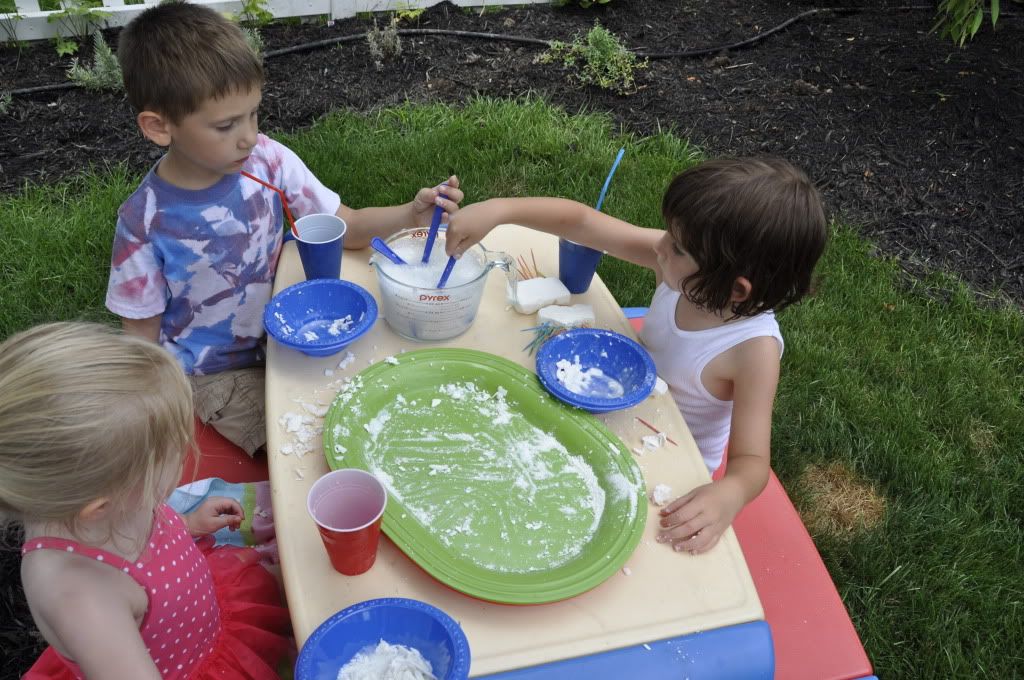 |
| Impromptu Soap Shaving Sensory Experiences |
We let the kids mix the shaving with bits of water and stir and move them around. This created a lot of slippery and slimy fun for the kids. You've got to love summer for fun experiences like this.
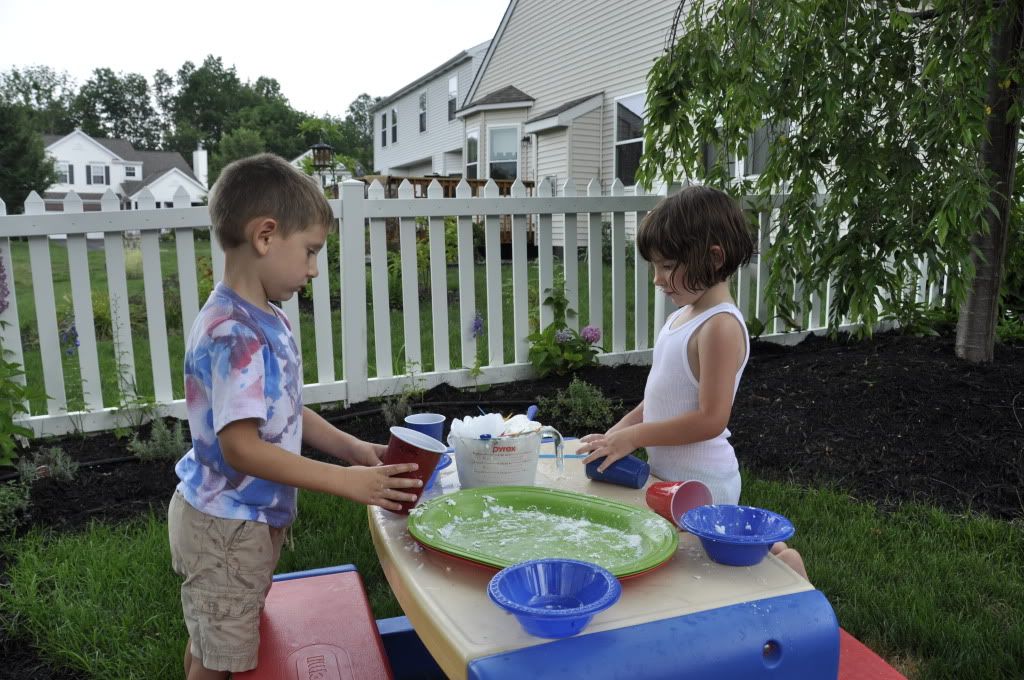 |
| Marcus decides to add some ice cubes to his soap concoction |
Science: Our Sense of Taste
Old Sneep's plan for ruining Colonel Carter's celebration involves sucking on a lemon.
This causes the band members lips to pucker up so they can't play their instruments. We used this as a springboard for a discussion on our taste buds.
Activity #1: Tongue Tests
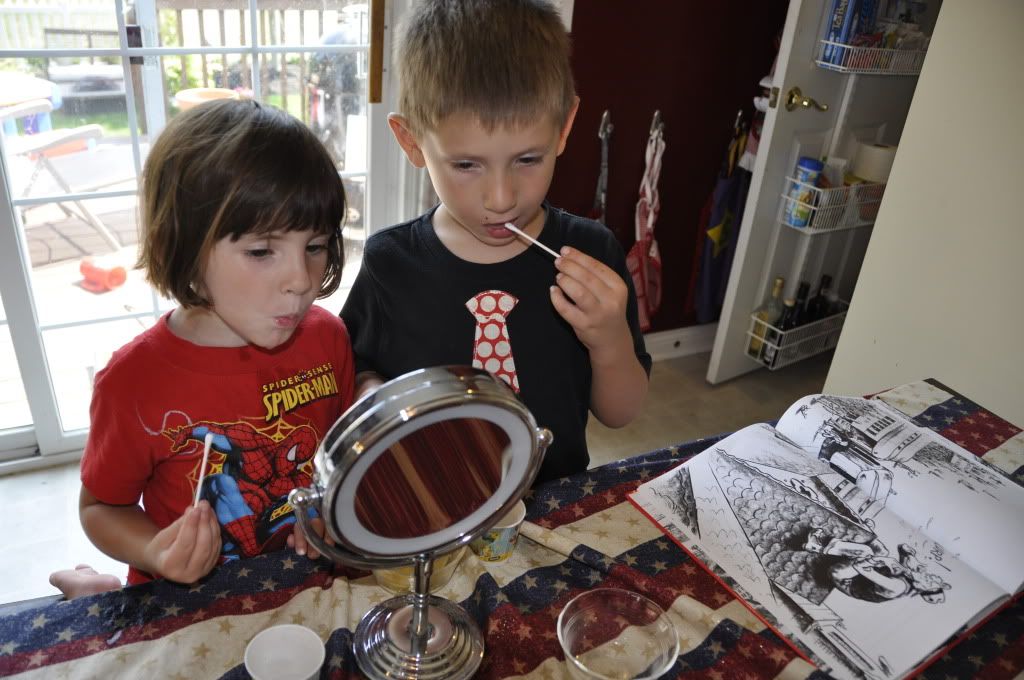
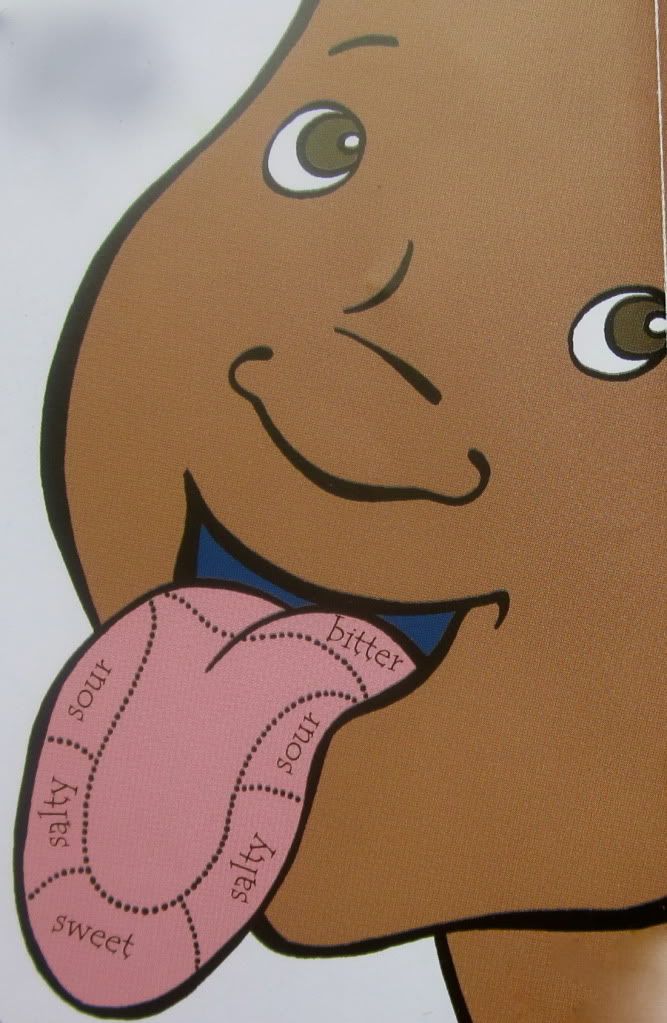
We talked about how we use our tongue to taste things. We also discussed how different parts of our tongue can taste different things the best. I had the kids stick out their tongues in front of a mirror and we looked at the small bumps on the surface of our tongue. We also discussed which parts of our tongue taste different things.
I then set out a series of substances for them to taste. I gave them unsweetened chocolate for bitter, salt water for salty, lemon juice for sour, and sugar water for sweet. This is important because most preschoolers are probably familiar with what sweet taste like. However, most are probably not familiar with what sour, bitter, and salty tastes like.
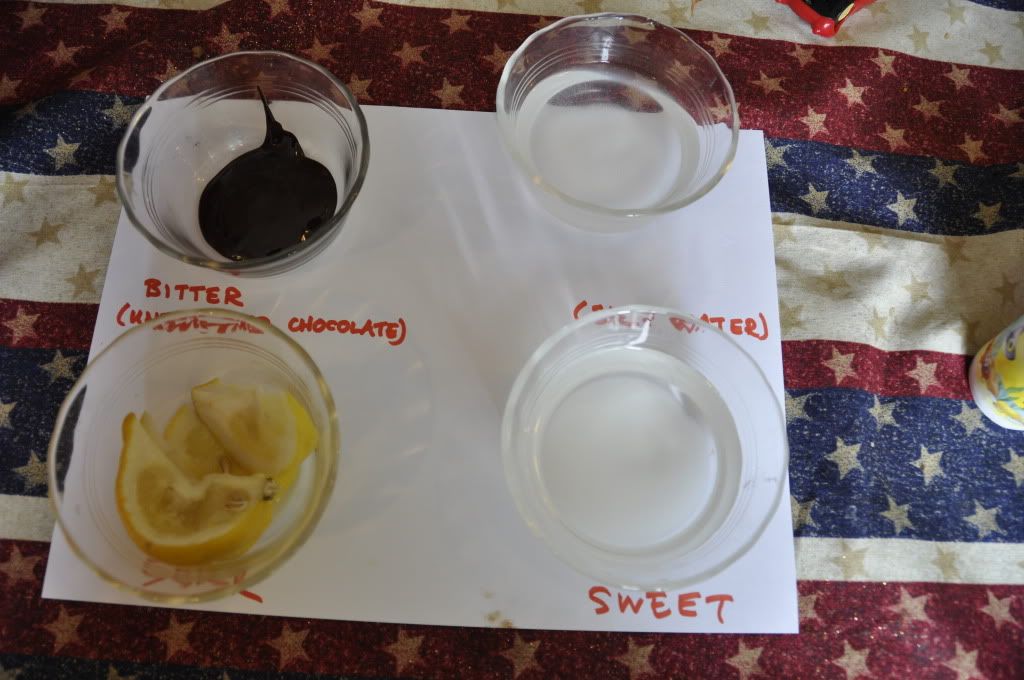 |
| Bitter, Salty, Sour, and Sweet Substances |
Then we did the following experiment to show how different parts of our tongue taste things differently:
1) Dip a q-tip into the sugar water and dab it on the back of our tongues. Then one side, and then the tip. I asked the kids where it tasted the sweetest. (Answer the tip of our tongue.)
2) Next we rinsed our mouth with water and repeated the same process for the bitter, salty, and sour substances.
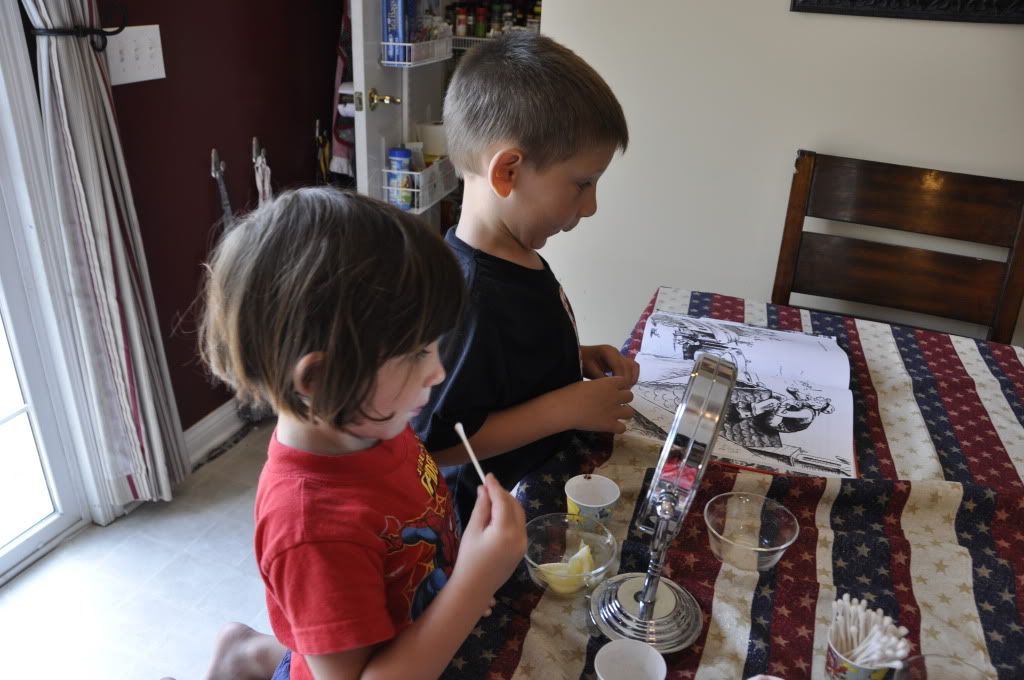 |
| Marcus really did pucker his lips up after he tasted a sour lemon for the first time! He looked just like an Alto band member! |
Activity #2: Smelling Tastes
We then talked about how our foods can taste differently when we have a stuffed up nose. So we talked about how our sense of smell plays an important part in our ability to distinguish between different tastes. We did this experiment to show this:
1) With a blindfold on, I had the kids taste cherry yogurt and banana yogurt. I asked them if they could tell the difference? (Answer yes.)
2) Next, I had them pinch their nose and taste the yogurts again. This time they couldn't tell a difference between the two yogurts.
We discussed how our tongue can only tell that both yogurts taste sweet. It can not distinguish between the different flavors. We use our sense of smell to disquisition between the different flavors. That is why our food sometimes doesn't taste as good when we have a cold.
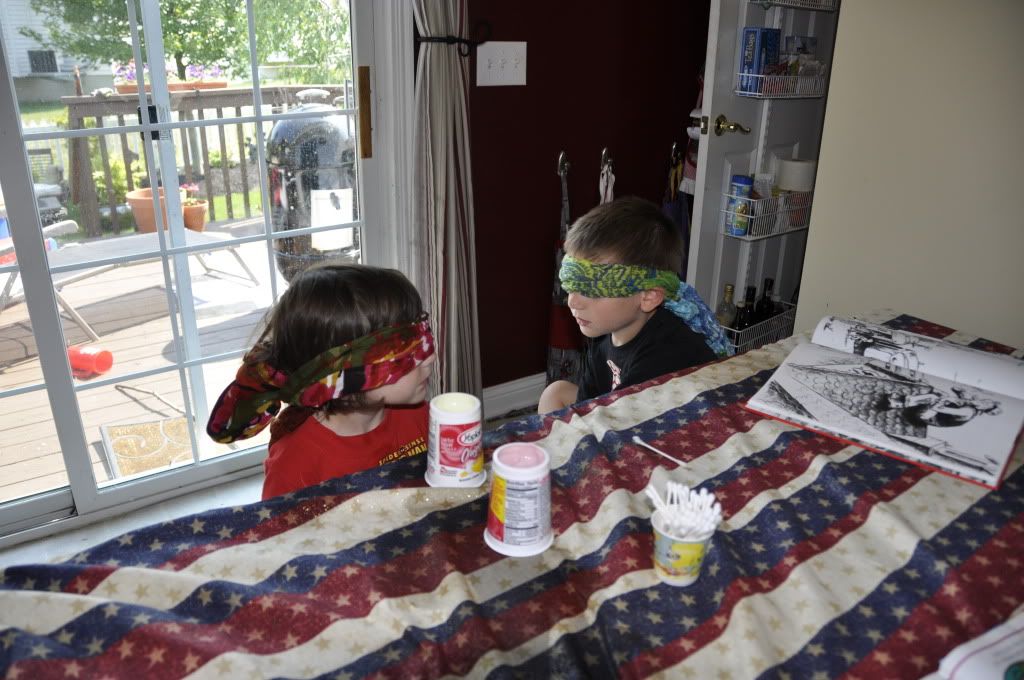 |
| The kids learning how our sense of smell plays an important part in our ability to distinguish between various flavors. |
Science: Sound and Acoustics
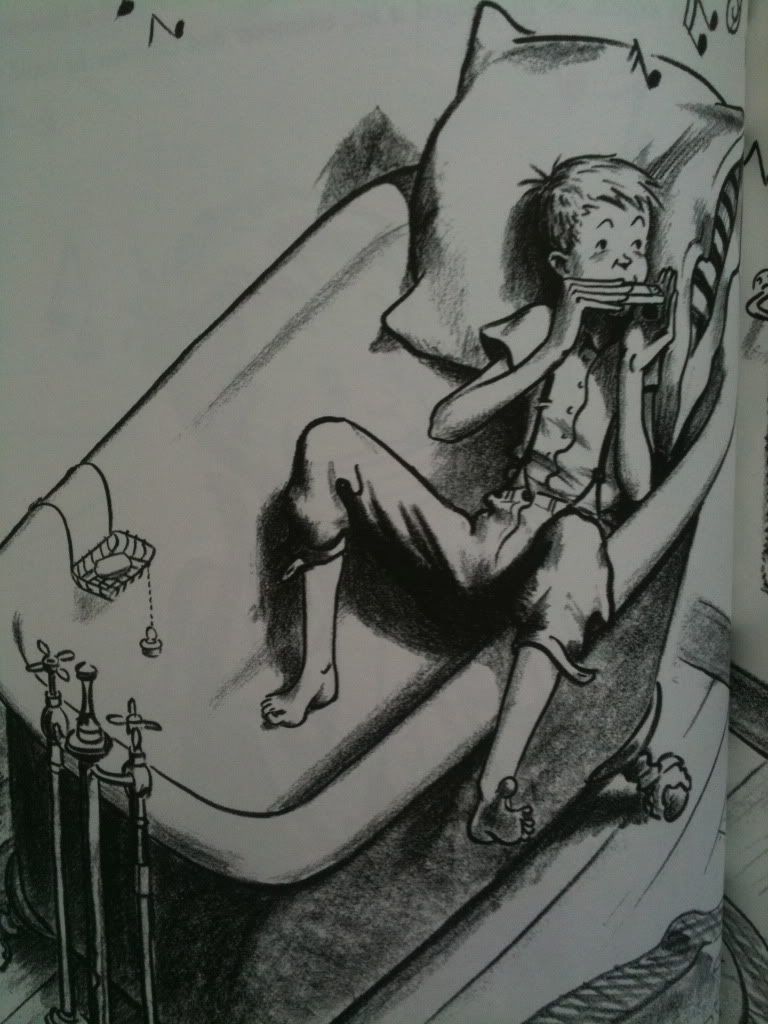
Lentil practices his harmonica in the bathtub. He says, "There the sound is improved 100%." So on another day we used this as a start for a discussion on sound and acoustics.
Activity #1: Sound is made when something vibrates
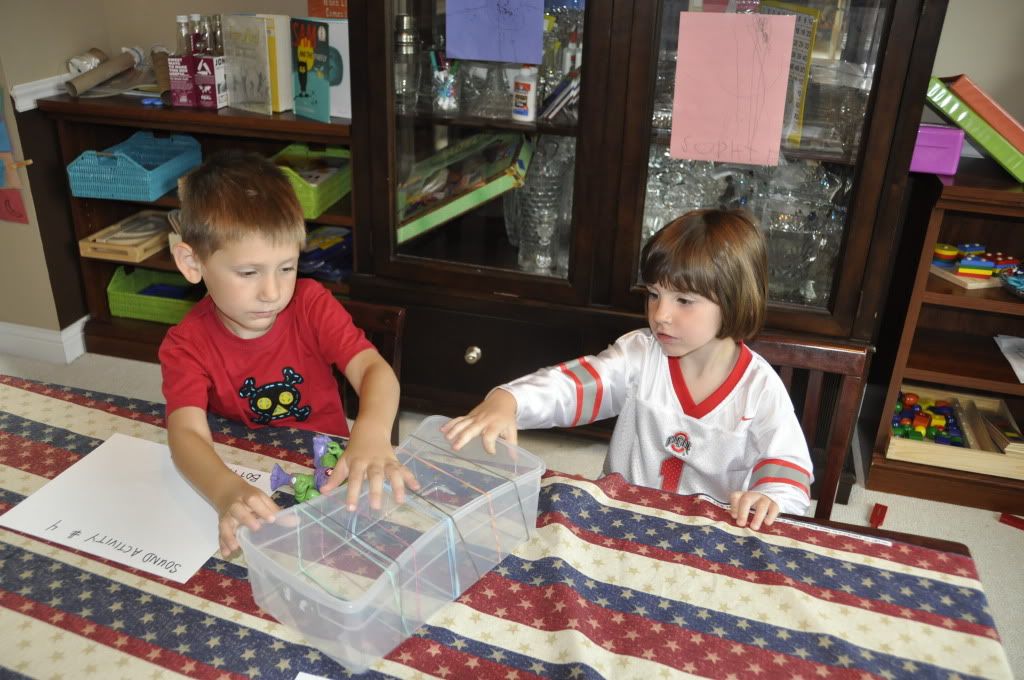
In our first activity, we stretched some rubber bands over a shoe box to make a "rubber band guitar." I had the kids pluck the elastic to make a sound. We noticed that the bands vibrate. (I told them that vibrate means to move back and forth quickly.) We talked about how sound is a form of traveling energy produced when something vibrates.
Activity #2: How do we make sound?
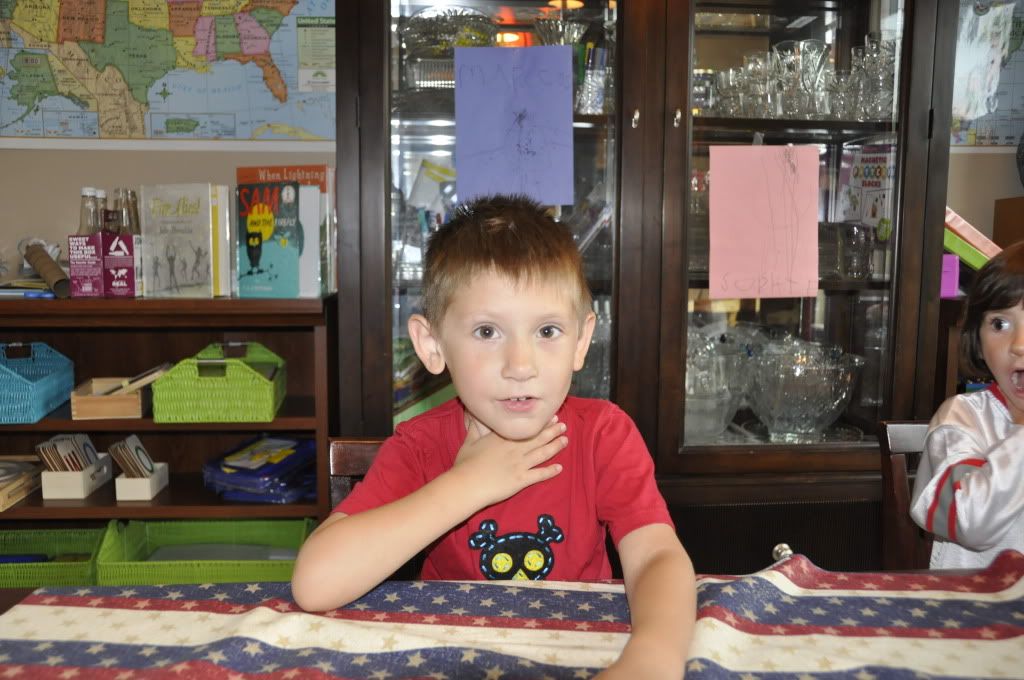
I had the kids put their fingers on the lump in the middle of their throat. I then had them sing to see what it feels like. They could feel their throat vibrating. We talked about how you have parts in your throat called vocal chords which vibrate when we make sounds.
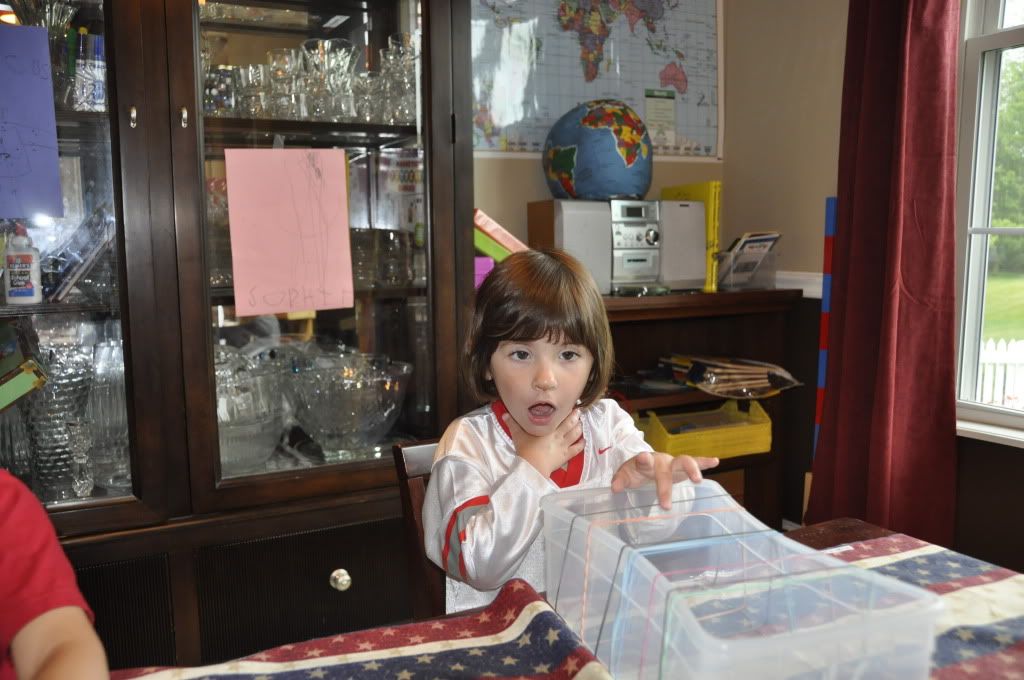 |
| Marcus and Sophie singing and feeling the vibration in their throats. |
Activity #3: Sound Catcher
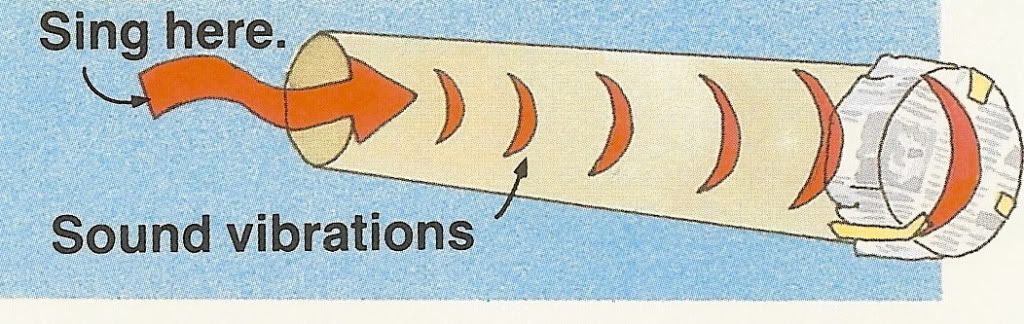
We talked about how sound waves travel through the air. So, we made a "sound catcher" out of a paper towel roll with freezer paper taped to the end so that we could feel some of these sound waves. (You have to get the paper pretty tight to get this to work.) We sung through the paper towel rolls and we could feel the paper vibrating as our sound waves hit it. We sang high notes which send very fast waves through the air. This made the paper vibrate quickly. Then we sang low notes which send slow waves through the air. This made the paper vibrate slowly.
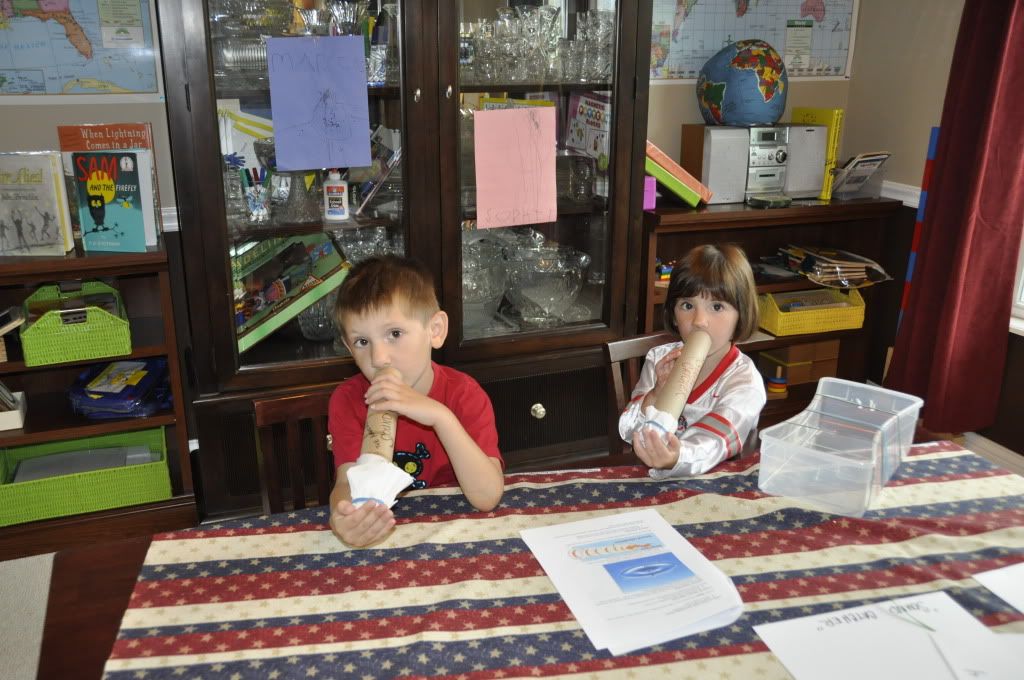 |
| "Sound Catchers" in Action |
Activity #4: Bottle Music
The next thing we did was blow across the top of an empty bottle to see if we could make a sound. We then put a little bit of water into a bottle and blew across the top of it again. We noticed that the sound changed. I explained that the more water we put in, the less air was left in the bottle. Smaller amounts of air vibrate more quickly and that made a higher sound.
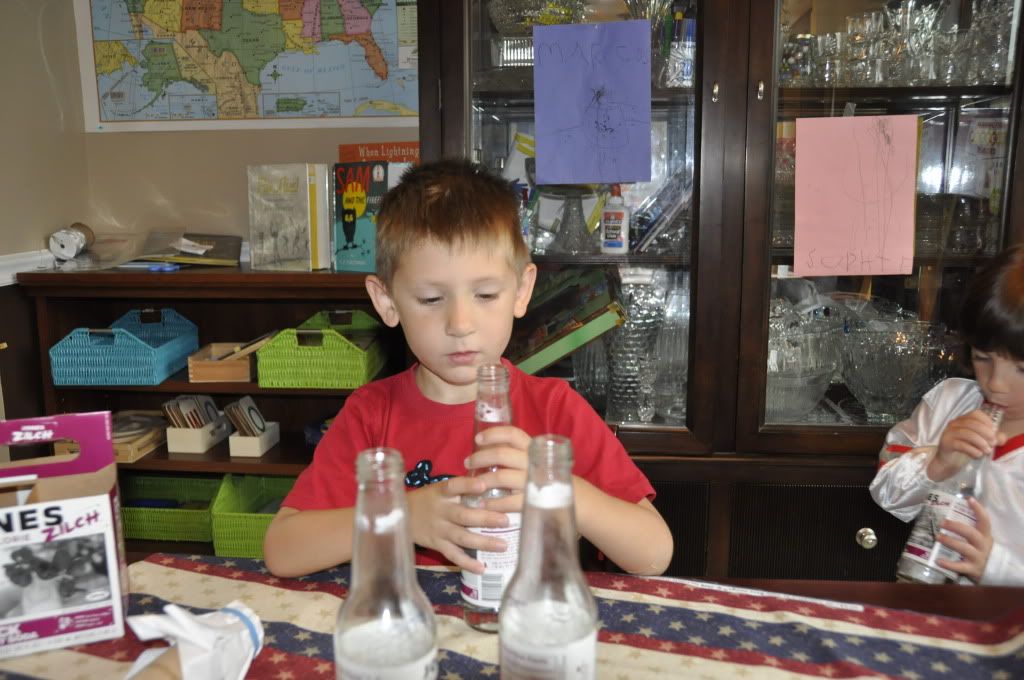 |
| Learning about sound using some empty soda bottles |
Activity #5: How do we hear a sound?
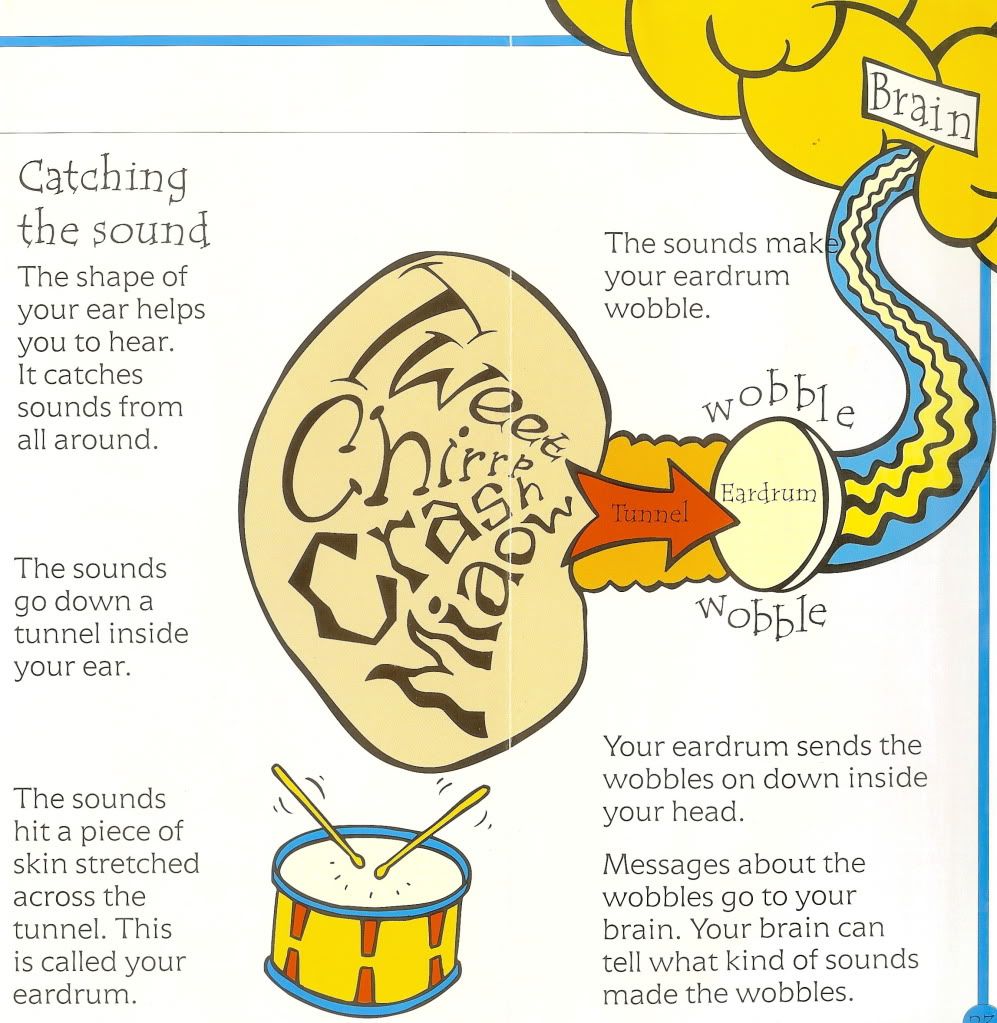
We talked about how the shape of our ears helps us to catch sound waves. We then talked about how the sound goes down the tunnel in our ear and hits a special piece of skin stretched across the tunnel called an ear drum.
We hit a drum to show them how the surface of the drum will vibrate when you hit it. We talked about how our ear drum works in the same way. When the sound waves hit it, it "wobbles". We then talked about how our brain interprets messages about those "wobbles" and can tell what kind of sound we heard.
Activity #6: How does a harmonica make sound?
We took out our harmonica and talked about how harmonicas are played by blowing air into the various holes. I told them that the holes are also called reed chambers. Each of these chambers has multiple, variable tuned reeds. The reeds are secured at one end and loose on the other end. When you blow into the holes it causes the loose end of the reed to vibrate and create a sound.
The kids were not familiar with what a reed was, so I showed them how a reed works using a piece of grass. (Some people call this a grass horn.) To make one of these find a piece of grass about 4" long and sandwich it between your thumbs stretching it tight. (It takes some practice to hold it tight enough to make a sound.) Then blow!
Activity #7: Why did Lentil's harmonica sound better in the bathtub?
In our next activity we talked about why Lentil's harmonica playing sounded so much better in his bathtub. It improved the sound in two ways: volume and reverberation.
a) Volume: Hard, smooth surfaces (like Lentil's bathtub) absorb very little sound. The sound would reflect back and forth between the walls of the bathtub before eventually dying a way. Since all of this sound energy was contained in such a small space, Lentil's bathtub boosts his harmonica's sound intensity.
b) Reverberation: With many reflected sound waves bouncing around in the bathtub, some sound waves wind up traveling farther than others before finally arriving at your ear. This stretches out the sound you hear, an effect called reverberation. So when Lentil would play a note with his harmonica, the sound would seem to hang in the air long after each note is made. This would result in a richer and fuller sound.
To show this we did two different activities.
First we talked about absorption. We talked about how soft surfaces can absorb forces. Whereas hard surfaces can often reflect sounds. Marcus and Sophie had trouble picturing what I was talking about so we used a ball to show this. The ball didn't bounce when thrown on a cushion because the cushion absorbed the force. The ball did bounce on hard surfaces.
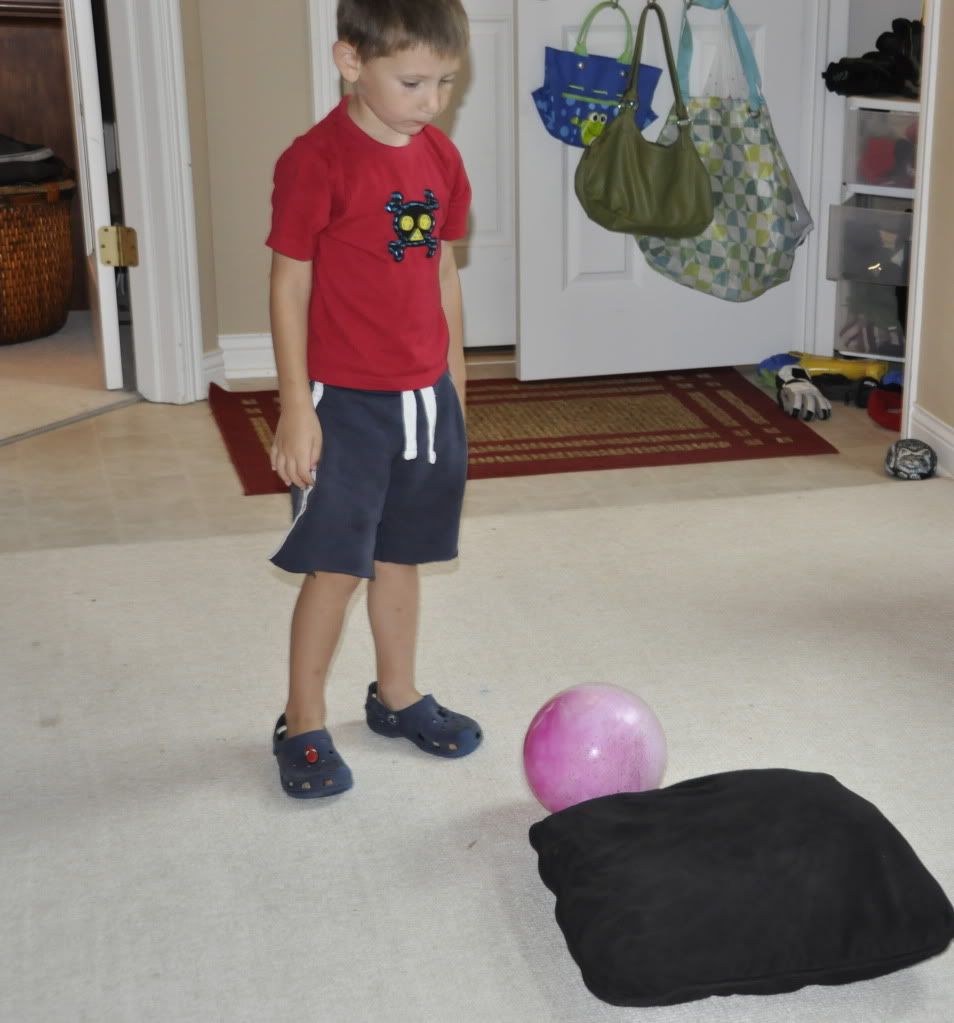 |
| The ball will not bounce on a cushion. |
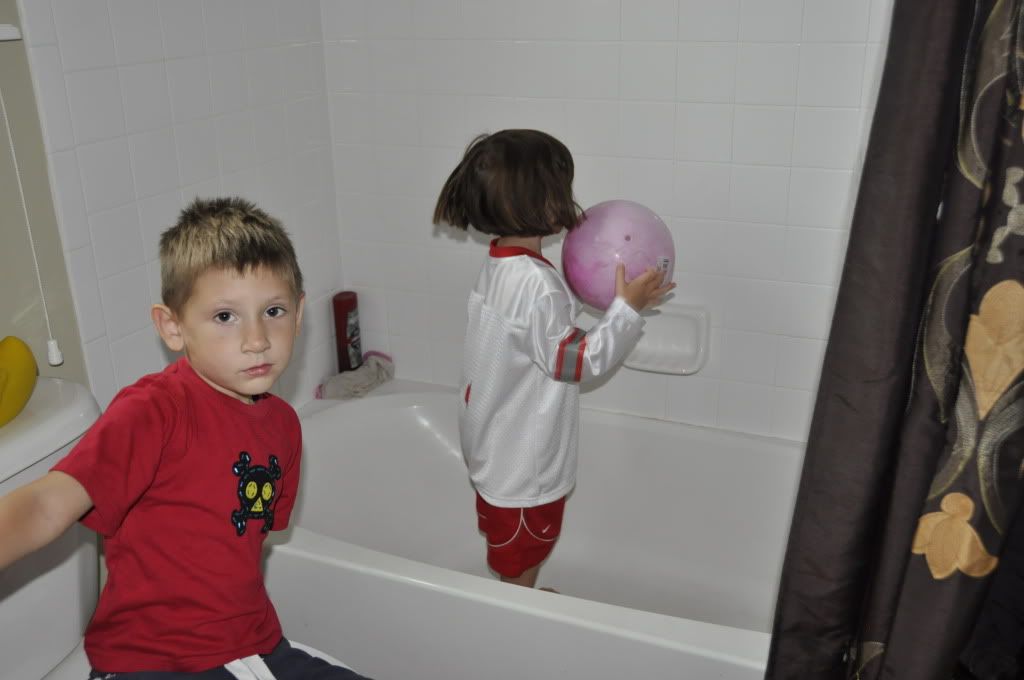 |
| The ball did bounce on hard surfaces. Just like sound will. |
Next we actually got inside the bathtub and tried singing. We could hear the reverberation when we did this. Next we got in our beds (with lots of soft surfaces) and tried singing. We could hear the changes in volume and our sounds didn't sound as rich and full.
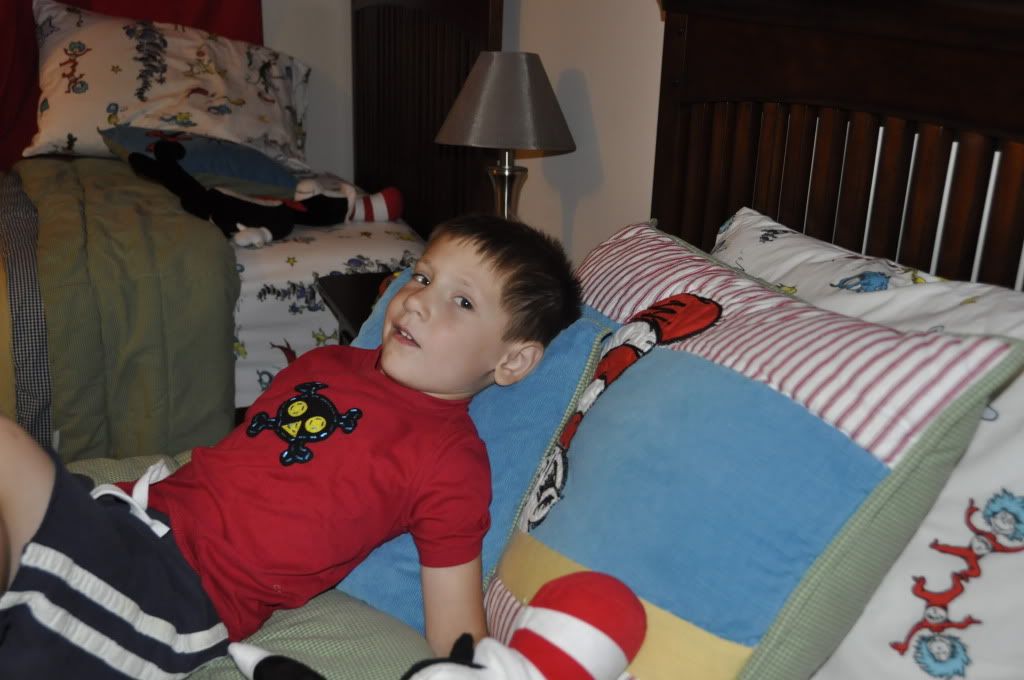 |
| Marcus singing in his bed. |
Making Memories: Lentil Parade and Ice Cream Party
In the story, Lentil saves the day by playing "She'll be Comin' Round the Mountain" on his harmonica. The entire town of Alto, Ohio marches to Colonel Carter's house while Lentil plays. Then the entire town enjoys ice cream cones...and even Old Sneep is happy at the end.
At the end of the week we invited our friends over for a Lentil party. Each kid wore red, white, and blue and brought a musical instrument. We marched from our house to a nearby playground playing "She'll Be Comin' Round the Mountain when she comes". We played on the playground (aka the "train station") for a bit and then came back to my house for ice cream cones. It was a great time!
 |
Our parade! Kids are playing "She'll be coming around the mountain!"
Picture source: Strader Speil |
 |
We came back for Ice Cream and Lemonade after the parade
Picture source: Strader Speil |
Links to Become Attached To:
Soap Whittling Tips from Ivory
A WikiHow page on how to make a
grass horn.
Preschool Corner (See what others are doing this week!)
Math Mondays- See other ideas for exploring math concepts with children
Tot School- Tons of ideas for learning at home with your tot
Would you like to win a copy of this book? See my latest giveaway here!


 . This is one of the science books in our